.png)

UIP-11: The Noise-O-Meter, How Loud Is Too Loud?

1. Problem Statement ⚡
Noise plays a powerful role in shaping our learning environment, health, and overall well-being. Yet, in today’s fast-paced and crowded communities, its impact on concentration, productivity, and public health is often overlooked.
Every day, we are surrounded by sounds - traffic, construction work, loudspeakers, conversations, and celebrations that influence how we think, feel, and function. While sound is a natural part of life, many children are unaware of when it crosses the line into harmful noise and how it affects both classroom learning and community life.
Excessive noise significantly impacts daily activities, disrupting focus, increasing stress levels, and even posing long-term health risks such as hearing damage. However, its consequences are rarely reflected upon in everyday behavior. Understanding noise pollution helps us become more mindful of shared spaces, respect others’ comfort, and make responsible choices that promote collective well-being.
This project encouraged students to explore an important question: How loud is too loud, how does noise affect our daily learning and community life, and how can we manage it effectively to create calmer, healthier environments?
2. Project Description 🎭
Students of Grade 3 undertook a Unit Integrated Project titled “The Noise-O-Meter: How Loud Is Too Loud?”
The project aimed to help students understand how noise affects learning, health, and community well-being, and how awareness can transform everyday habits into responsible actions.
Through interactive activities, observation exercises, and creative expression, students learned that managing noise is not just about classroom discipline, it is about developing environmental awareness and civic responsibility from an early age.

✨ Activities included:
• Observation Activity: Students identified different times of the school day when classroom noise levels were highest and discussed how it affected concentration and comfort.

• Understanding Noise Pollution: Students were introduced to safe sound levels and discussed how excessive
noise in communities from traffic, construction, and public gatherings impacts health and well-being.
• Survey Activity: Students conducted a peer survey to understand how noise affects focus, hearing, and classroom experience. The findings revealed that many students struggle to concentrate when sound levels increase.
• Design Thinking: Students used their art skills to design and create a simple visual monitoring tool - the “Noise-O-Meter” to help regulate classroom sound levels.
• Drama Integration: Students performed a short skit demonstrating the difference between a noisy classroom and a calm one, highlighting practical solutions to reduce sound levels.

3. Project Goals / Objectives 🎯
This Unit Integrated Project aimed to help students understand how noise pollution influences health and learning, and how managing it enhances focus, harmony, and civic awareness.

Objectives:
💡 Understand the Impact of Noise: Help students analyze how excessive sound affects concentration, health, and community life.
📊 Develop Observation and Data Skills: Encourage students to identify peak noise times and interpret survey findings.
🎨 Promote Creative Problem-Solving: Enable students to design a practical visual tool to monitor sound levels.
🎭 Encourage Expressive Learning: Use drama and role-play to demonstrate real-life consequences of noise.
🌍 Build Responsible Citizenship: Instill awareness about shared spaces and environmental responsibility.
💪 Enhance Focus and Well-being: Support a calmer classroom environment that improves learning outcomes.
4. Process and Timeline 🗓️
• Introduction and Discussion: Students began by discussing what noise pollution is and how it affects both classrooms and communities. They were introduced to WHO guidelines on safe decibel ranges and the risks associated with excessive sound.
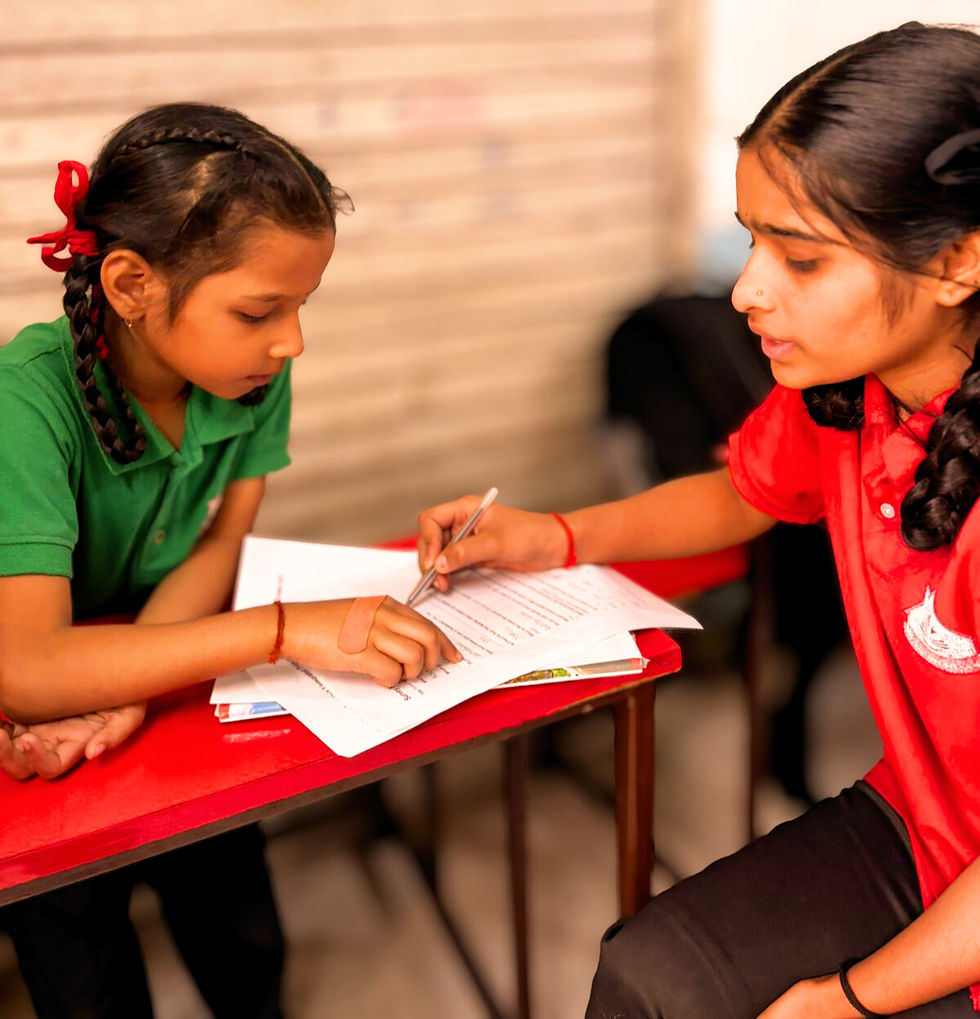
• Observation and Research: Students observed classroom noise patterns and reflected on common sources of noise in their neighborhoods such as traffic, loudspeakers, and construction activities.
• Survey and Analysis: Through peer surveys, students discovered that high noise levels often make it difficult to focus, hear instructions clearly, and feel comfortable during lessons.
• Creative Construction: Students designed and built their own “Noise-O-Meter” models as a visual reminder to maintain appropriate sound levels.
• Group Presentation: Each group presented their findings and performed skits demonstrating how awareness and self-control can transform noisy spaces into productive environments.
5. Student Reflection 💭

🔊 Noise Affects Everyone: Students realized that excessive sound impacts focus, health, and emotional comfort.
🧠 Awareness Builds Responsibility: Understanding noise pollution helped them become more mindful of their own voices and actions.
👀 Observation Strengthens Understanding: Identifying noise patterns improved their analytical thinking.
💬 Communication Encourages Change: Presenting ideas and performing skits helped them confidently express solutions.
🌍 Responsible Citizens in the Making: Students understood that managing noise is not just a classroom rule but a social responsibility that contributes to healthier communities.
They concluded thoughtfully - “When we control our noise, we protect our learning and our community.”
6. Closing Thought 🌟
“The Noise-O-Meter: How Loud Is Too Loud?” was not just a classroom project, it was a meaningful lesson in environmental awareness and civic responsibility. Students recognized that noise pollution is a genuine community issue and that even small actions, such as lowering one’s voice, can create a positive ripple effect.
By connecting classroom behavior to real-world challenges, students began to see themselves as responsible contributors to society.
At Ashraya, we believe experiential learning builds awareness, empathy, and accountability. Through projects like these, we nurture environmentally conscious and socially responsible citizens from an early age.
7. Call to Action ✊
Let’s create environments where learning and well-being thrive without unnecessary noise.
✨ Be mindful of your voice.
✨ Respect silence zones in schools, hospitals, and communities.
✨ Reduce unnecessary honking and loud disturbances.
✨ Encourage children to become responsible and aware citizens.
When awareness begins in the classroom, positive change begins in the community.
👉 Support Ashraya’s mission to promote experiential learning, environmental responsibility, and holistic child development.
Contribute here: ashrayainitiative.org/donate


Comments